In short: Xtream IPTV is an internet television subscription carrying 50,000+ live channels and a large on-demand library, aimed primarily at viewers in the UK, US and Canada. Credentials are issued in the standard Xtream Codes format, activation takes minutes, plans run from one to twenty-four months with no auto-renewal, and a free 24-hour trial is available before you pay anything.
What Xtream IPTV actually is
Internet Protocol Television is television delivered as data over a broadband connection rather than as a broadcast signal down a cable, through a dish or off an aerial. The picture that reaches your screen is identical in kind to the one a satellite box produces; what changes is the delivery road it travels down.
That single change removes most of the apparatus people associate with paid television. There is no dish bolted to a wall, no installation appointment, no proprietary box rented by the month, and no eighteen-month contract with an exit fee attached. What remains is a login: a username, a password and a server address that you type into an application on a device you already own.
Xtream IPTV is one such service. A subscription provides access to more than nineteen thousand live channels drawn from broadcasters around the world, alongside a video-on-demand catalogue of films and complete television series. Coverage is deepest across the United Kingdom, the United States and Canada, which is where most of our subscribers live, with substantial European, Arabic, South Asian and Latin American sections beyond that.
Xtream Codes, Xtream IPTV, and why the names look alike
This confuses a great many people arriving from a search engine, so it is worth separating carefully.
Xtream Codes is not a television service at all. It is the name of the panel software that became the industry standard for managing IPTV subscriptions, and more importantly it is the name of the login format that software introduced. An Xtream Codes login is a set of three fields — server URL, username, password — and virtually every IPTV application built in the last decade knows how to accept them.
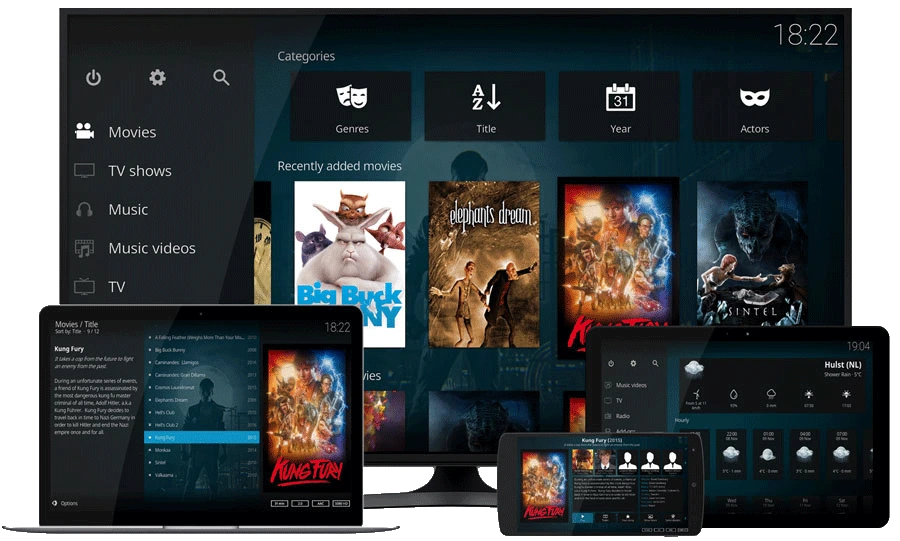
Xtream IPTV is our subscription service. We issue credentials in that standard Xtream Codes format, which is precisely why your subscription works in IPTV Smarters Pro, TiviMate, IBO Player, XCIPTV and dozens of other applications without any bespoke software from us.
The practical consequence is worth stating plainly: you are not locked into an application controlled by your provider. If you dislike the player you started with, you change the player and keep the subscription. That portability is a genuine advantage over closed platforms, and it is the main reason the format became universal. We have written a fuller explanation on our Xtream Codes page for anyone who wants the detail.
What you need before you start
Three things, and you very likely have all of them.
A broadband connection with some headroom. Around 15 Mbps comfortably carries a Full HD stream. For 4K, or for two or three people watching different things simultaneously, 25 Mbps upwards is the sensible range. Most modern connections in the UK, US and Canada clear this easily. A wired Ethernet cable to the main television always outperforms Wi-Fi, and 5 GHz Wi-Fi always outperforms the older 2.4 GHz band.
A device that runs an app. A smart television, an Amazon Firestick, an Android box, a phone, a tablet, a laptop or a set-top box. Practically anything sold in the last several years qualifies.
A player application. Free, from the relevant app store, and installed once. Our installation guide walks through the specific steps for each platform, including the extra hoop Firestick requires and the MAC-address process Samsung and LG sets use.
The channel lineup in practical terms
A channel count is close to meaningless on its own. Any provider can inflate one by counting the same broadcaster in four qualities and three languages. What determines whether a subscription is worth paying for is narrower: are the specific channels you personally watch present, do they hold up during peak hours, and does the guide work.
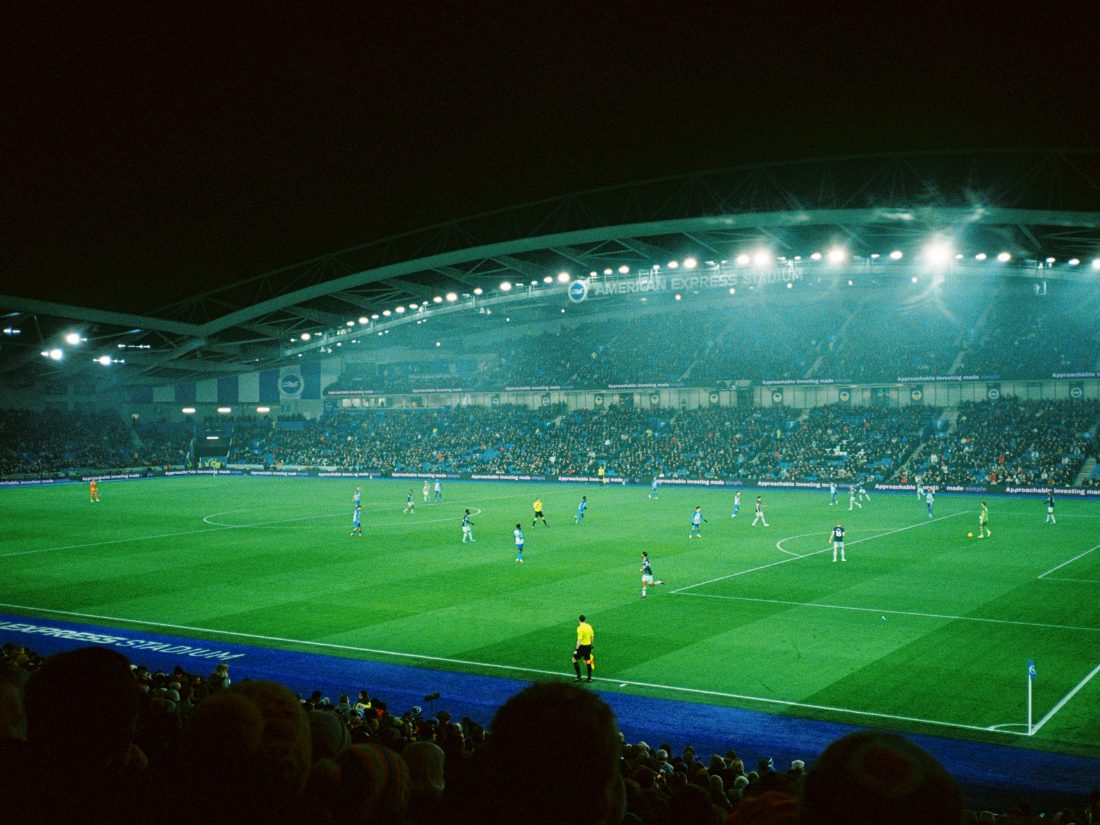
Our sports section covers the major European football leagues with several feeds per fixture, so you can choose a commentary language or move if one source stutters. North American sport runs through the ESPN family, the league packages and the regional sports networks that carry local games — the very games national packages exclude. Motorsport, combat sport, tennis, cricket, golf and rugby all have their own groups.
Entertainment is the broadest area and the hardest to summarise: the general networks from each country, the drama and comedy channels, reality and competition formats, documentary and factual programming. If you presently flick through it on a cable box in the evening, it is almost certainly here.
Children's channels sit in their own bouquet, which matters more than it sounds — handing a tablet to a child should not mean handing over the entire lineup. News is a genuine strength of internet television: instead of one or two domestic channels you get the major international networks side by side, which is quietly valuable when a story is being reported differently in different countries.
The international section is the deciding factor for a large share of our subscribers. Arabic, Turkish, Indian, Pakistani, Balkan, Scandinavian, Polish, Filipino and Latin American bouquets are carried in their original languages with local commentary, not as dubbed international feeds. The full breakdown lives on the channel list page.
Quality, the EPG and catch-up
Channels run at 4K where the source provides it, Full HD across most of the lineup, and SD on older or lower-bandwidth feeds. Where more than one version of a channel exists, your player will usually let you pin a preference.
A complete electronic programme guide covers the vast majority of channels. This sounds like a small detail and is not: the difference between a polished television service and a raw list of streams is almost entirely the guide. With an EPG you can see what is on now and next, browse a schedule and plan an evening. Without one you are scrolling through channel names hoping to recognise something.
Many channels also carry catch-up, typically covering the last few days, so joining a programme twenty minutes late does not mean missing it.
Why peak-time performance is the only test that counts
Any service streams flawlessly at three o'clock on a Tuesday afternoon. The meaningful question is what happens at eight in the evening, or at kick-off, when a very large number of people request the same stream in the same few seconds.
That is an infrastructure problem rather than a content problem, and it is where cheap providers come apart. Our delivery runs across load-balanced servers in multiple regions with automatic reconnect, and popular events are given additional capacity and alternative feeds in advance. We publish a 99.9% uptime target and we would rather be judged on a busy Saturday than a quiet weekday.
This is also our honest advice for evaluating anyone, including us: take a free trial and test it during the busiest hour you actually watch. A provider unwilling to give you that opportunity is telling you something worth hearing.
Coverage in the UK, the US and Canada
Our subscriber base is concentrated in these three markets and the lineup reflects that.
In the United Kingdom, that means the full terrestrial range — BBC, ITV, Channel 4 and Channel 5 with their variants — alongside the Sky Sports and Sky Cinema networks, TNT Sports and the wider Freeview and Freesat listings. Because UK football rights are split across several broadcasters, following one club through a season conventionally requires more than one subscription; consolidating that is the single most common reason British viewers move across.
In the United States, the broadcast networks are carried as local affiliate feeds from the major markets rather than one national stream, which preserves local news and regionally scheduled sport. The ESPN family, the premium film and drama channels and the regional sports networks are all present, the last of these being what national league packages specifically exclude.
In Canada, CBC, CTV and Global sit alongside TSN and Sportsnet, with French-language channels from Quebec included.
How this compares with cable and with streaming apps
Against traditional cable or satellite, the comparison is mostly about cost and commitment. A cable package with sport and film tiers attached comfortably exceeds a hundred pounds or dollars a month once equipment rental is counted, generally on a long contract. An Xtream IPTV subscription is a one-off payment for a fixed term with no hardware rental and no exit penalty.
Against subscription streaming apps the comparison is different, because they solve a different problem. Those services are built around on-demand originals and are very good at that. They are weak or absent on live television: no rolling news, and live sport is limited at best. Running several of them to cover different catalogues is how a great many households ended up paying more than their old cable bill for less of what they actually watch.
IPTV inverts that. It leads with live television and attaches a large on-demand catalogue behind it. If your viewing is mostly sport, news, or channels from a country you no longer live in, it is the better fit — and it consolidates what would otherwise be several separate bills.
Choosing any IPTV provider: what to actually check
Whether or not you choose us, these are the questions worth putting to anyone.
- Will you give me a trial? A provider confident in its service will. Test it at peak time, on your own hardware.
- Is this specific channel carried? Ask by name, before paying. A straight answer is a good sign; vagueness is not.
- How many connections does the price include? Some headline prices cover a single screen and charge steeply for a second.
- Does it renew automatically? Ours does not. Many do, and cancelling is sometimes made deliberately awkward.
- Who answers on a Sunday evening? The reply to that question predicts the next twelve months more reliably than any feature list.
A note on legality
IPTV as a technology is entirely legal — it is how most major broadcasters now distribute their own services. What varies between countries is the licensing of the content carried, and rules differ by jurisdiction. Subscribers are responsible for understanding the position where they live, including any television licensing obligation that applies regardless of how a broadcast is received. We are not in a position to give legal advice, and we would treat any provider claiming to settle that question on your behalf with caution.
Getting started with Xtream IPTV
The lowest-risk route is a free 24-hour trial. It is the complete service rather than a cut-down demonstration: every channel, the full catalogue, the guide. No card details are taken and there is nothing to cancel afterwards — when the day is up, the line simply stops.
If you would rather go straight in, the pricing page lists every term and connection combination. Each plan is a single payment; nothing recurs. Your credentials are emailed within minutes of the payment clearing, with a setup guide matched to the device you nominate, and our support team is reachable on live chat and WhatsApp at any hour if you would prefer someone to walk you through the first five minutes.